
WI.Plat Selected for WIN-WIN HONORS through AI-Based Leak Management Demonstration with Korea Midland Power
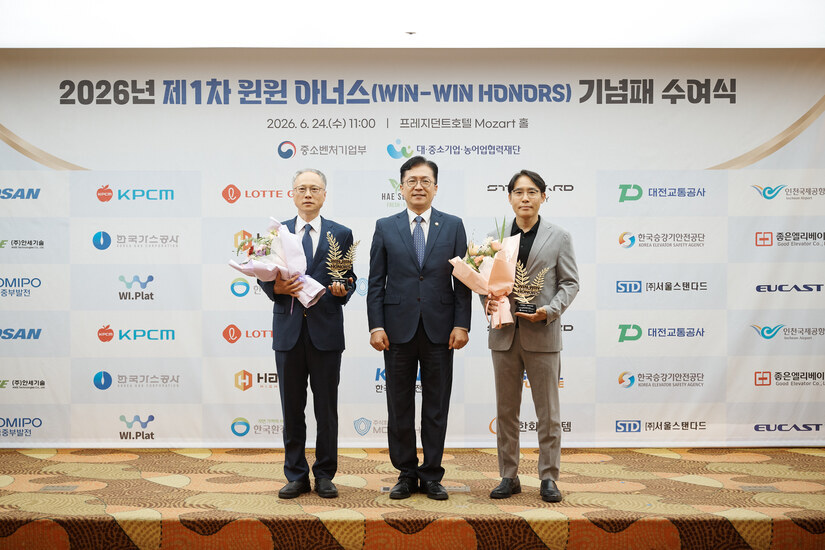
WI.Plat’s AI-based leak management system demonstration, carried out in cooperation with Korea Midland Power, has been selected for the 2026 WIN-WIN HONORS project by the Ministry of SMEs and Startups.
The project focused on addressing micro-leak issues in power plant piping systems, using the Sejong Power Division as a demonstration site. In power plants, constant operational noise and complex piping structures make it difficult to identify leak sounds through conventional methods. WI.Plat applied its AI-based leak sound analysis technology to this challenging environment, using actual field data such as piping information and operational noise data.
Through this demonstration, WI.Plat verified how AI can help distinguish leak sounds from background noise in industrial facilities. The project also showed that WI.Plat’s technology, originally developed and applied in the water distribution sector, can be expanded to power plants, industrial facilities, and other infrastructure where early leak detection is directly linked to operational efficiency and asset safety.
This collaboration also builds on the achievements recognized at the 2025 Public-Private Open Innovation Performance Sharing Event, where the AI-based leak management project received the Minister of SMEs and Startups Award. The 2026 WIN-WIN HONORS selection further highlights the project as a meaningful cooperation model between a public enterprise and a technology startup.
Korea Midland Power provided the field environment and operational data needed for technical verification, while WI.Plat contributed its AI leak detection expertise and field-oriented solution development capabilities. Together, the two organizations created a practical case of public-private cooperation aimed at solving real operational challenges in industrial infrastructure.
With this selection, WI.Plat will continue to advance its AI-based smart leak management solutions and expand their application beyond water networks to power plants, plants, industrial piping systems, and public infrastructure.
